Find home care options
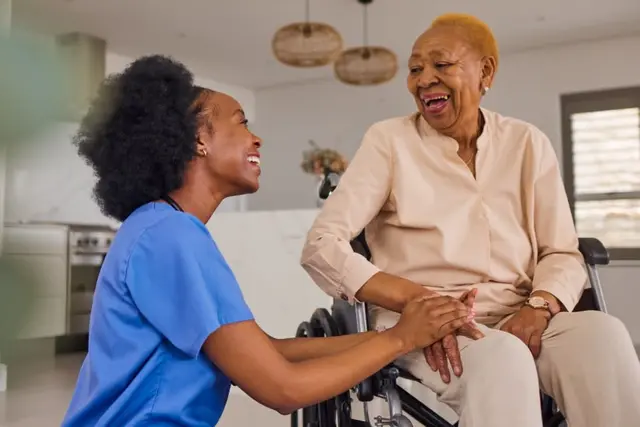
Home care is a professional service for seniors who want to receive supportive care in the comfort of their own home. This care may include companionship, help with activities of daily living (ADLs), home health care for medical needs, or a combination of these. Sometimes also known as in-home care or domestic care, home care may help seniors safely age in place and give family members peace of mind.
Personal care, or assistance with ADLs, is the most commonly used in-home care service. However, services are customized to meet a senior’s unique needs. Here are examples of other popular nonmedical home care services:
Nonmedical in-home care services are usually provided by personal care aides. The role of a personal care aide is to provide companionship, assistance with personal hygiene tasks, and help with household chores. Home health care services are provided by or under the direct supervision of licensed nurses and therapists. The role of home health care providers is to monitor a senior’s health and deliver skilled medical and rehabilitative care.
A Place for Mom offers advice on caring for a parent at home, information on the different types of in-home care, tips on hiring a caregiver, and more. Our guidance can help you make informed decisions about your loved one’s care.

Our free tool provides options, advice, and next steps based on your unique situation.
Many older adults prefer to age at home and can often do so with the support of family and professional caregivers. Recognizing changes in your loved one’s health and behavior will help you understand when it’s time to offer more assistance, hire in-home care, make home modifications, or consider senior living options. To avoid caregiver burnout, it’s also important to consider your own limits when caring for a loved one at home. The following articles address red flags to look for, ways to improve home safety for seniors, and how to navigate important care decisions.




There are many different home care services that can help seniors preserve or improve their quality of life at home. These services are split into two main categories: nonmedical and medical.
Nonmedical home care may consist of companion care, homemaking assistance, personal care, or some combination of these. Older adults who live alone may benefit from companion care, which offers emotional support and socialization. For seniors who just need a little extra support around the house, homemaker services can provide help with laundry, chores, and cooking. Personal care provides nonmedical support with daily activities like dressing and bathing.
Home health care is medical in nature. It’s usually prescribed for homebound seniors who require skilled care at home for a health condition or after a hospital stay. Services can include skilled nursing care, like wound care and medication administration, and skilled rehabilitation services, like physical therapy. Home health care services are provided or at least overseen by licensed medical professionals.



Personal care consists of assistance with activities of daily living (ADLs): dressing, bathing, feeding, toileting, continence care, mobility, and transfers. This is often the type of care seniors need to continue living at home rather than moving to a senior living facility.

Daily chores can become increasingly difficult for seniors as they age. Assistance with household tasks like cleaning, laundry, and pet care can help make sure your loved one’s home stays organized, clean, and safe. A caregiver can also help out around the house by running errands, picking up groceries and prescriptions, and cooking healthy meals.

In-home care can extend outside of the home, too. Transportation is a vital service for seniors who no longer drive. Professional caregivers can drive seniors to social events, stores, and doctor’s appointments. They can also provide assistance and companionship on these outings, if desired.

Managing medications is often challenging for seniors who take complicated regimens, especially for those living with Alzheimer’s disease or another form of dementia. In-home caregivers can provide medication reminders to ensure an aging loved one takes the correct medication and dosage at the right times.

Companion care focuses on providing socialization and emotional support to aging adults. In-home companions visit frequently to have conversations, play games, listen to music, go on outings, or help a senior participate in a favorite hobby. Staying connected and engaged is crucial for the physical and mental well-being of older adults who live alone.

Skilled care, or home health care, can include services like health monitoring, wound care, injections and IV therapies, medication administration, catheter care, physical therapy, occupational therapy, and speech-language pathology.
The median cost of nonmedical home care in the U.S. is $34 per hour, according to proprietary data gathered by A Place for Mom. Where your loved one lives and the level of assistance they need are the primary factors that affect overall costs. The following articles offer a more in-depth look at home care costs and how they compare to the cost of other senior care types.
Assistance for seniors living at home can be expensive, but there are several payment sources that can help cover home care costs. The way a family pays for home care will often depend on the type of care their loved one needs.
Most families pay for nonmedical home care out of pocket. Private pay methods may include funds from a personal savings account and retirement or pension payments. Some seniors may also use benefits from a long-term care insurance policy or funds in a health savings account.
Depending on their financial situation and medical needs, some seniors may qualify for home care coverage through public insurance programs such as Medicaid and Medicare. Eligible veterans and their spouses may also tap into a variety of benefit programs offered through the U.S. Department of Veterans Affairs (VA).
Explore the following resources to learn more about the different ways to pay for home care.
Families can hire a caregiver through a home care agency or choose to hire an independent caregiver directly.
Home care agencies can often reduce the stress of finding and managing an in-home caregiver for a loved one. They typically screen employees by interviewing them and doing background checks. Agencies match caregivers to a senior’s needs and personality and will provide a substitute if their regular caregiver is out sick. Agencies also handle payroll and taxes.
Hiring an independent caregiver usually provides more flexibility and offers the family more control over the interviewing and selection process. Independent caregivers may be less expensive than those hired through an agency, but this arrangement requires the family to take on the responsibility being the caregiver’s employer. This may include doing background checks, interviewing, scheduling, and administrative tasks.
Each type of home care provider has its own benefits. It’s important to find a caregiver who will get along well with your loved one and provide a high quality of care. The following guides cover everything you need to know about choosing a home care provider.

Ask an A Place for Mom local advisor at no cost.